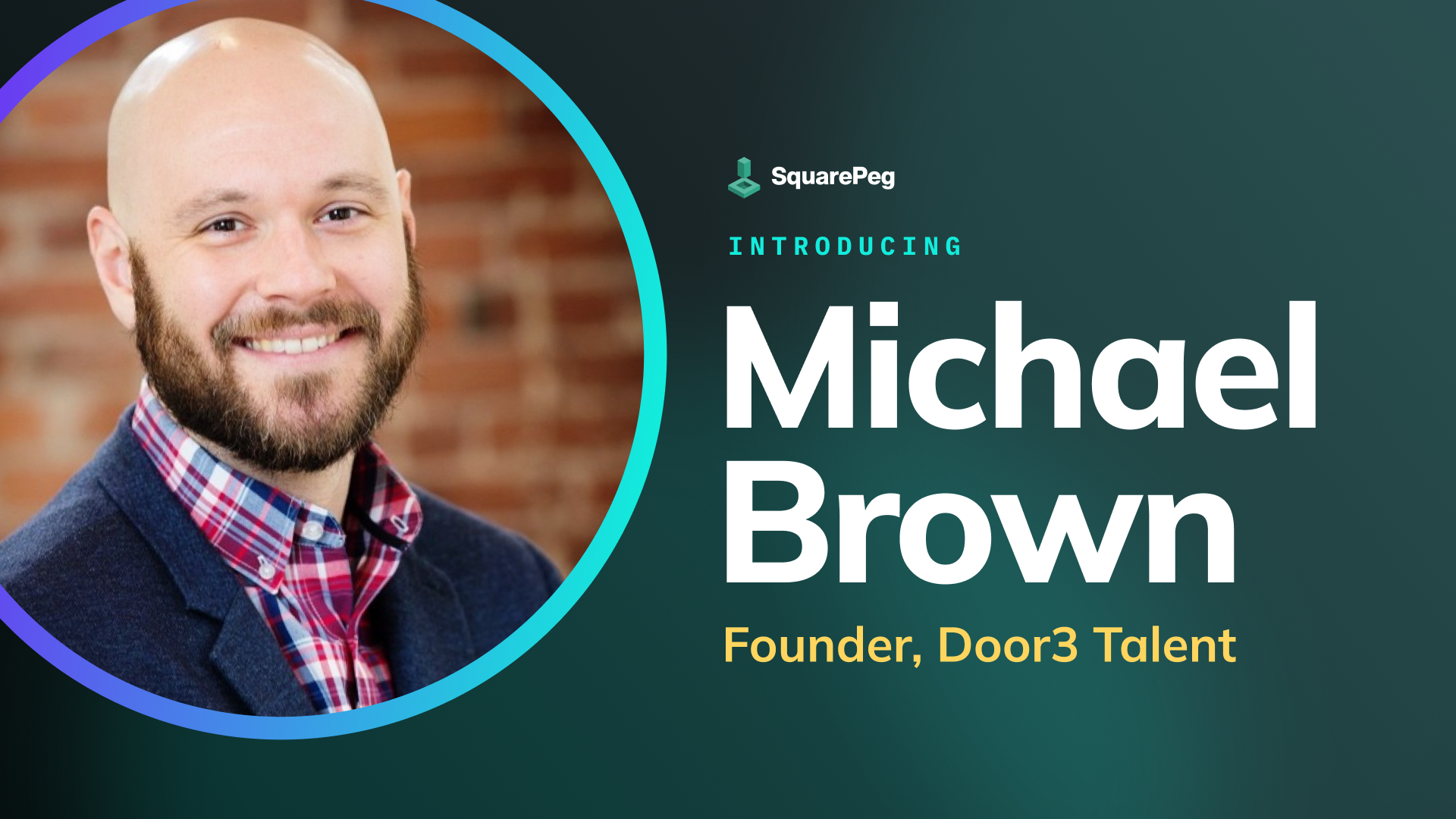
In the ever-evolving world of recruiting, few voices resonate quite like Michael Brown’s. With over 40,000 professionals tuning into his insights on AI-native recruiting systems, Brown represents a rare breed, someone who doesn’t just speculate about the future of hiring but actively builds it. His influence is undeniable, his frameworks are actionable, and his vision? Equal parts pragmatic and bold.
I first crossed paths with Michael during his time leading talent acquisition at Snyk. What stood out wasn’t just his deep understanding of tech or the early adoption of AI in recruiting, it was the clarity with which he translated complexity into strategy. At a time when AI hype can drown out real substance, Brown cuts through the noise with grounded wisdom and a systems-first mindset.
The Experimentation Imperative The conversation began with what might be the most important insight for any leader navigating today's technological landscape: the critical importance of experimentation over passive observation. As Brown puts it:
This observation reveals a fundamental market inefficiency that creates both opportunity and risk. The 10% who tinker gain compound advantages through early learning and relationship building with emerging platforms. Meanwhile, the 90% who wait find themselves not just behind on capabilities, but lacking the experiential knowledge necessary to evaluate and implement solutions effectively when they finally do adopt.
Michael believes that the winners in today’s market aren’t waiting around. They’re experimenting. He’s seen firsthand how recruiters who lean into early tech trials gain compound advantages: deeper learning, faster iteration, and stronger vendor relationships.
His advice? Follow a framework:
Peer Validation : When multiple respected voices in your network begin discussing a tool or platform, it signals market momentum worth investigating. This isn't about following trends blindly, but recognizing that collective attention often precedes breakthrough adoption.
Low Barrier Experimentation : The best technologies for early adoption offer time-bound, cost-bounded pilots. This reduces organizational risk while maximizing learning potential. The ability to experiment without betting the company allows for more aggressive exploration of promising technologies.
Public Building : Companies that develop in the open, sharing roadmaps and engaging with their user community, offer better partnership opportunities. This transparency allows you to align your adoption timeline with their development priorities and influence product direction.
Founder Involvement : Direct access to founding teams signals both the company's commitment to customer success and their receptivity to feedback that can shape product development.
Rapid ROI Visibility : The best enterprise tools demonstrate value quickly enough to build internal momentum before organizational attention shifts elsewhere.
Vendor Partnership : The willingness and ability of vendors to customize solutions indicates both technical flexibility and commercial alignment with your success.
Strategic Extensibility : Understanding what's coming next in a platform's development allows you to make adoption decisions based on future potential, not just current capabilities.
This framework transforms technology evaluation from a reactive process into a strategic capability. Organizations that develop systematic approaches to early-stage technology evaluation gain sustainable competitive advantages in talent markets where technological leverage increasingly determines outcomes.
The Evolution of the Recruiting Role Michael Brown flips the typical AI narrative on its head. This isn’t about recruiters being replaced. It’s about them being unleashed. With the right tools, AI isn’t a threat. It’s a multiplier.
In Brown’s view, tomorrow’s recruiting teams won’t just be smaller, they’ll be sharper. Picture less of a call center and more of a high-performing sales team. High-value, data-informed, and focused on what really moves the needle. The days of junior team members buried under resume piles are fading. AI systems now take on that heavy lifting, freeing up senior recruiters to become workflow architects, candidate strategists, and relationship builders.
This shift toward "recruiting that looks like sales" mirrors broader trends in specialization and value creation. Just like sales teams have evolved with tools for targeting, nurturing, and converting, recruiting is moving toward smarter identification, deeper engagement, and more intentional conversion.
This new era calls for a new kind of recruiter. Someone who understands prompting, product thinking, and system design, not as trendy buzzwords but as essential skills. It’s the move from reactive hiring to proactive talent orchestration.
At SquarePeg, this future is already unfolding. We don’t build tech to replace recruiters. We build it to supercharge them. Our platform reads between the lines, ranks talent with context, and highlights patterns your instincts already sense. The result? Less time spent guessing, more time spent connecting.
Because when recruiters aren’t buried in busywork, they don’t just fill roles. They elevate them.
Ecosystem Integration and the End of Monoliths One of Brown's most compelling visions concerns the evolution of recruiting technology ecosystems. His frustration with current fragmentation points toward a more integrated future:
This vision challenges the current trend toward all-in-one platforms that attempt to solve every recruiting need within a single interface. Instead, Brown advocates for best-in-breed solutions that integrate seamlessly within a unified workflow orchestration layer.
The parallel to workflow automation platforms like Relay.app and N8N is instructive. These platforms succeed not by replacing specialized tools, but by making specialized tools work together more effectively. Applied to recruiting, this approach would allow organizations to combine the best ATS for core workflow management with the best sourcing tools, the best assessment platforms, and the best candidate experience systems.
This architectural vision has profound implications for both technology vendors and talent acquisition leaders. Vendors benefit from focusing on core competencies rather than feature proliferation. Talent leaders gain the flexibility to optimize each component of their workflow while maintaining system-wide coherence.
The ecosystem approach also addresses one of recruiting's persistent challenges: the tension between standardization and customization. Organizations can standardize on integration protocols and data formats while customizing functional components to match their specific needs and culture.
What it Means for Candidates and Hiring Managers Brown’s vision isn’t recruiter-exclusive. He believes hiring managers will become true strategic partners, armed with sharper market insights, clearer candidate signals, and better hiring data.
Hiring managers retain decision-making authority while benefiting from dramatically improved signal and intelligence. The recruiter-hiring manager relationship evolves toward true strategic partnership, with recruiters providing not just candidates but comprehensive market intelligence, competitive analysis, and strategic recommendations.
For candidates, it’s about flipping the funnel. Think less "apply everywhere," more "let the right roles find you." It’s a reverse marketplace driven by authenticity, expertise, and transparency.
This model rewards authenticity and continuous professional development over traditional job-seeking behaviors. Candidates who consistently share their work, insights, and professional growth create compound advantages in AI-driven talent markets where algorithms can better identify genuine expertise and cultural fit.
The emphasis on authentic self-presentation becomes particularly important as AI-generated content proliferates. Brown notes the need for candidates to be clear about what's written with AI assistance, reflecting broader market trends toward transparency and authenticity in professional communication.
The Strategic Imperative Our conversation concluded with what may be the most important insight for any professional navigating this transition: the imperative for active experimentation and system building.
Brown's success stems not from predicting the future but from consistently engaging with emerging technologies, building relationships with innovative vendors, and developing frameworks for systematic evaluation and adoption. This approach creates compound advantages that extend far beyond any individual tool or platform.
The professionals and organizations that thrive in AI-augmented talent markets will be those that develop systematic approaches to technological experimentation, maintain networks within emerging technology communities, and build internal capabilities for rapid evaluation and adoption of new tools.
This isn't about becoming a technology company or abandoning core recruiting competencies. It's about developing the systematic experimentation capabilities necessary to navigate continuous technological change while maintaining focus on fundamental talent acquisition outcomes.
The future belongs not to those who can predict which specific technologies will dominate, but to those who can rapidly evaluate, adopt, and integrate whatever technologies emerge. Brown's framework provides a roadmap for developing these capabilities systematically rather than hoping for lucky guesses about technological winners.
In an era of unprecedented technological change, the ability to experiment systematically may be the most valuable professional skill of all. Michael Brown's approach offers a template for developing this capability while building the future of talent acquisition one experiment at a time.
At SquarePeg, We’re On The Same Page Brown’s entire approach aligns beautifully with how we think at SquarePeg. We’re not here to replace great recruiters. We’re here to amplify them. With tools that enrich resumes, rank talent, and plug seamlessly into your workflows, we give talent teams superpowers where they need them most.
Brown’s frameworks offer more than inspiration. They provide a real, tactical playbook for building a future-ready talent function, one that’s data-driven, flexible, and unapologetically human. Interested in how SquarePeg can help you enrich, score, and connect with just your applicant data? Schedule a demo with us!


.svg)



.svg)


