How the best talent leaders think like systems architects, not order-takers
Here's a thought experiment: take your last five hires and ask yourself one question. Not "Did we fill the role quickly?" or "Did we stay within budget?" But this: Did these people make the business measurably stronger?
If you hesitated, you're not alone. Most recruiting departments are optimizing for the wrong outcomes. Time-to-fill, cost-per-hire, pipeline velocity—these metrics create the appearance of progress while the actual question goes unanswered: are we systematically building an organization of exceptional talent?
The culprit isn't lazy recruiters or bad intentions. It's that most companies have never actually designed their hiring as a system. They've inherited a Frankenstein's monster of old templates, borrowed "best practices," and vendor tools that were never meant to work together. Ownership is fuzzy. Feedback loops are nonexistent. The machine hums along, but nobody can articulate what it's optimizing for.
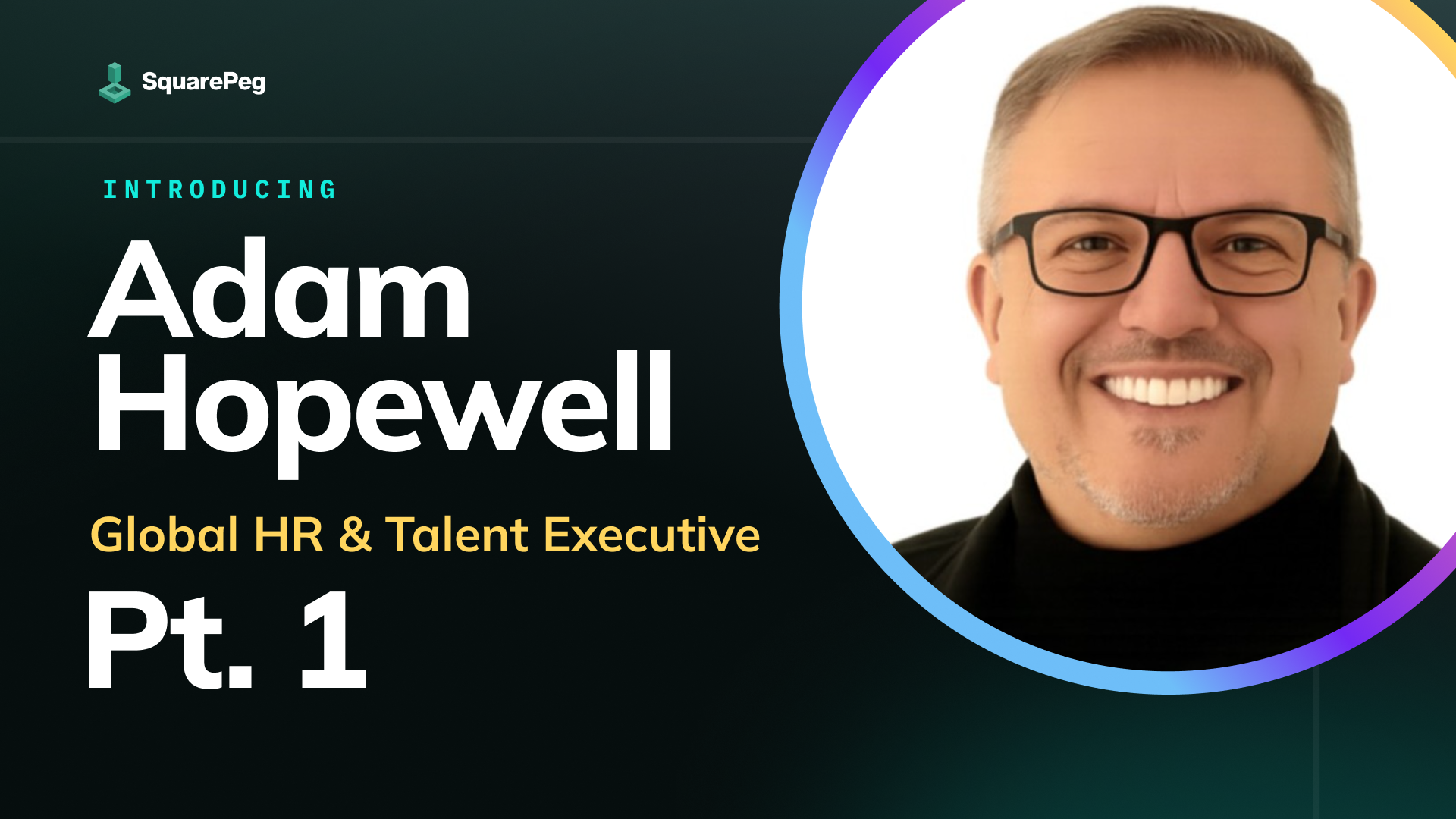
Adam Hopewell has spent over a decade obsessing over this problem. As a talent systems architect who's built hiring infrastructure from scratch at companies like Behavox, he's developed what he calls his "magnum opus"—a scientifically grounded framework for building talent density that actually works.
Talking with Adam is like watching a master engineer lay out blueprints. Every answer is precise, structured around frameworks and metaphors that make complex systems suddenly click into place. He doesn't just know hiring—he's reverse-engineered it down to its fundamental components and rebuilt it better.
What follows is his case for redesigning talent acquisition from first principles. These are the frameworks that separate tactical recruiters from strategic talent leaders. The systems that transform hiring from a cost center into a competitive advantage. The science behind building organizations where every hire systematically upgrades your capability.
If you're in talent acquisition and aspire to leadership, this is your playbook.
Step One: Stop Asking the Wrong Questions Most transformations in talent acquisition start with the wrong opening line. Leaders ask: How do we hire faster? How do we improve candidate experience? How do we hit this quarter’s headcount target? These questions feel useful because they are measurable and urgent. But downstream they are the real problem.
Hopewell argues these are operational questions, the equivalent of pouring concrete before deciding where the bridge should go. Without clarity on why you are hiring and what success looks like , you risk designing efficient processes for the wrong outcomes. Speed becomes the stand in for quality. Volume substitutes for precision. Activity crowds out impact.
He separates hiring into three layers:
Strategic – What does the business need from talent? Clarity here means knowing the capabilities the company must acquire to win its market, by when, and at what quality bar. It is not headcount math. It is capability math.Tactical – How will you measure whether it is working? Decide on a small set of outcome metrics that tie directly to business value. These define the scientific middle layer, what you will instrument, test, and iterate.Operational – What processes deliver those results? Only after strategy and measurement are crisp do you design pipelines, interview loops, enablement, and tooling.Most organizations jump straight to the bottom. “You can’t calibrate an interview process,” he explains, “if you have never defined the strategic outcomes you are trying to achieve.” The result is a local optimization trap: a beautifully tuned funnel that produces the wrong slate.
Practical reset: before you touch workflows, write a one page “Hiring Thesis” with three bullet lists:
The capabilities the business must add this year. The acceptable trade offs, for example speed versus bar, experience versus signal, and cost versus ROI. The two or three outcome metrics that will decide if hiring helped the business win. Stakeholder Ideal Response Analysis (SIRA): Designing With the End in Mind
So how do you get the strategy right? Hopewell starts with Stakeholder Ideal Response Analysis .
The premise is simple and powerful: you cannot design a system without knowing what its key stakeholders expect when it is working perfectly. “Design backwards from the reaction you want to cause,” he says.
At Behavox, where he built one of his “magnum opuses,” he would list every stakeholder in the hiring system: the CEO, the executive team, hiring managers, candidates, people ops, legal, IT, and even customers and shareholders. Then he would force a conversation: prioritize them , and define their ideal response .
CEO ideal response: We have the right people, in the right roles, at the right time. Decompose it:Right people requires a way to measure quality of hire beyond probation.Right roles requires precise job definitions and competency mapping tied to business impact.Right time requires workforce planning and a reliable lead time for critical roles.Hiring manager ideal response: I trust the slate and the process reveals who can do the work. This implies calibrated interviews, strong work samples, and shared definitions of the bar.Candidate ideal response: I understand the role, I was assessed fairly, and I would recommend the company even if I do not get an offer. This sets expectations for clarity, speed, and respectful feedback loops.Legal and IT ideal response: The process is auditable, compliant, and secure. You will need explainability, data controls, and consistent documentation.SIRA eliminates vague objectives. Instead of generic goals like “improve hiring quality,” you are designing a system around concrete and testable outcomes that matter to your business. If a step does not move a prioritized stakeholder toward their ideal response, it is noise.
Working session tip: run a 60 minute SIRA workshop. Ask each stakeholder to write their ideal one sentence response to a fully working hiring engine. Vote to prioritize. Translate each sentence into two or three measurable requirements. You now have a strategic spec for your system.
The Measurement Revolution: From Vanity Metrics to ROTI
Clarity about outcomes only helps if you measure the right things. This is where Hopewell speaks plainly. “If you fill a role in ten days but that person flames out in six months,” he says, “what have you actually solved?” Time to fill and cost per hire are useful as health indicators, not as north stars .
His replacement is Return on Talent Investment , or ROTI . Think of it as ROI for people. For every dollar you spend on salaries, benefits, recruiting, and HR systems, what return do you see in revenue and profitability? ROTI forces you to connect talent inputs to commercial outcomes.
ROTI also changes behavior:
Sourcing asks which channels generate high ROTI cohorts, not just fast response rates.Hiring managers consider the trade off between speed and fit in dollar terms, not feelings.Talent leaders stop optimizing for cheaper hires and start optimizing for long term impact .Finance becomes a partner, because the metric speaks their language.A staged approach helps:
Define contribution windows by role, for example 6, 12, and 18 months. Sales may show contribution earlier. Engineering may lag but compounding value is higher.Tie performance signals to revenue or cost metrics, for example closed revenue, shipped features that reduce churn, support deflection, or cycle time improvement.Allocate costs realistically, including recruiting spend, tool licenses, interviewer time, and onboarding.Compare cohorts by source, funnel, manager, or geography, and look for consistent outliers.ROTI also exposes the hidden cost of silos. If acquisition optimizes for speed, development for engagement, and performance for short term productivity, they undermine one another. Integration is the only way forward. “When you connect acquisition, development, and performance into a single system,” Hopewell says, “that is when you generate talent density .”
A simple dashboard: instead of twenty widgets, track (a) ROTI by cohort, (b) quality of hire at 90, 180, and 365 days, (c) offer acceptance, and (d) time to signal, meaning how quickly a new hire produces a measurable outcome. Add time to fill as a capacity gauge, not a success metric.
The Calibration Conundrum: Why Interview Scores Are Broken
Even the best strategies and metrics stumble on human judgment. Interviews are riddled with inconsistency: one manager calls an answer brilliant, another calls it average. Cognitive load, interviewer mood, and uneven rubrics introduce noise.
Hopewell calls this the Calibration Conundrum . “I could listen to a candidate and think that is a four out of five,” he says. “You could listen to the same candidate and call it a two. Those scores are highly subjective.” The middle of a five point scale invites false precision.
Traditional fixes such as more interviewer training or longer rubrics barely dent the problem because they fight human nature. Hopewell’s solution is Outlier Analysis . Collapse the scoring scale to just three options:
0 = clearly absent 3 = standard or cannot tell 5 = clearly exceptional Humans are far better at spotting extremes than fine distinctions. This produces more 3s in the middle, which is fine. You stop pretending uncertain judgments are precise. What becomes valuable are the converging 5s across interviewers for specific competencies. If several independent evaluators mark a 5 on “systems design” or “enterprise discovery,” those are the data points that matter.
Layer in evidence notes and work samples . A 5 requires a cited artifact such as a portfolio link, code review, presentation, or numbers tied to impact. Now the score is not a vibe. It is a claim with proof.
Enablement tip: run quarterly “5s review” sessions where interviewers present anonymized evidence behind their 5s. Calibrate what “exceptional” looks like and refine prompts that elicit it.
The Five Competency Rule: Rewrite Job Definitions Finally, Hopewell takes aim at the bloated job description. “Laundry lists of twenty skills are fantasy documents,” he says. “They do not guide hiring. They confuse it.”
His alternative is the Five Competency Rule . Every role is defined by exactly five prioritized technical competencies . Not four. Not six. Five .
Why five? It is enough to capture the essence of the role without diluting focus. It forces managers to ask: What are the five capabilities that will move the needle for the business right now? The constraint creates clarity.
A practical template:
Competency name Definition in one sentenceEvidence of 3 meaning what “standard” looks likeEvidence of 5 meaning what “exceptional” looks like with examplesAssessment method for example work sample, case study, or paired exerciseAnd the hiring manager must define them , not HR, not a template, not an AI tool. AI can suggest ideas, but only the leader who owns the role can decide what success truly requires. Otherwise, accountability evaporates and interviews drift.
What this fixes: job postings become crisp, sourcing has a real spec, interviewers know what to hunt for, and onboarding maps to the same five pillars. Talent processes finally speak a single language.
Why This Matters: Hiring as a Business System Hopewell’s philosophy reframes the purpose of hiring. It is not about faster processes, fancier candidate experiences, or ticking off activity metrics. It is about building a machine that consistently increases talent density , the concentration of exceptional people who elevate performance.
When talent density rises, commercial success follows. Stronger teams ship better products, support reduces escalations, sales cycles compress, and culture becomes a force multiplier. “One of the greatest gifts you can give to a talent community,” Hopewell says, “is an organization that thrives commercially. Thriving companies create more raises, more bonuses, more opportunities for learning. There is more of pretty much everything.”
To get there, adopt three habits:
Design backward from SIRA. Know the ideal response you want from each stakeholder and build to cause it.Instrument for ROTI. Use outcome metrics that steer behavior toward value, not vanity.Reduce noise at the point of judgment. Outlier Analysis and the Five Competency Rule turn interviews from opinion theaters into evidence engines.Do these consistently and your recruiting engine stops being a series of transactions and becomes a learning system . Every cycle clarifies the bar, tightens the loop, and compounds talent density.
What’s Next This covers the foundational thinking—the strategic layer that most organizations skip entirely. But strategy without execution is just philosophy.
In Part 2, we get tactical. You'll see how Adam's Talent Seed metaphor reframes "culture fit" into something you can actually evaluate. How the 12-6-3-1 funnel systematically filters thousands of candidates down to one exceptional hire. And how 30-60-90 day loops create the rapid feedback you need to know if your evaluation methods actually work.
We're talking dashboards, interview prompts, operating cadences—the practical machinery that turns these principles into a self-improving system.


.svg)
.svg)